Keep every GPU independently useful
Dense GPU workers for jobs that do not need one shared memory pool.
Rendering, image generation, transcription, embeddings and scheduled batch work can map well to separate GPUs. That makes independent-worker architecture valuable and explains where older mining platforms may still have a bounded role.
Use independent workers where jobs can be queued separately. Use a modern server platform for business-critical support, system memory, remote management and sustained operation.

Workload before hardware
Describe the queue, the quality bar and the operating owner.
- 01 / Work unit
- Size from model, context, concurrent users and peak demand.
- 02 / Acceptance
- Agree quality, latency, citation or output checks before buying.
- 03 / Operations
- Plan updates, monitoring, support and a fallback route.
A queue is often more useful than tensor parallelism
Separate GPUs can process different frames, images, audio files or embedding batches with little inter-GPU communication.
This can improve utilisation and fault isolation without pretending the GPUs form one giant accelerator.
Demand shape
Peak demand can matter more than the daily average
- Work unit
- Tokens, frames, files or jobs.
- Duration
- How long one active job occupies capacity.
- Concurrency
- How many jobs overlap.
- Deadline
- Interactive response or queued completion.
Trace the work before sizing the capacity.
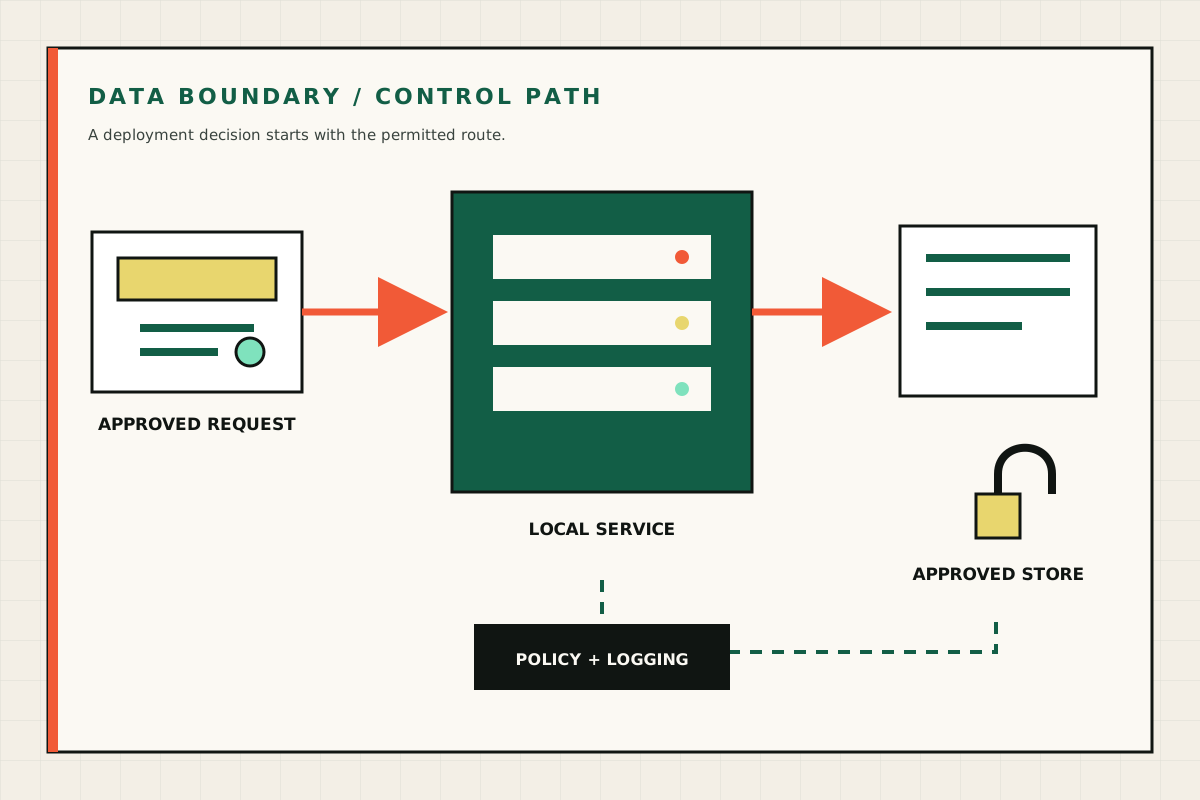
The queue, memory shape, data path and management route turn a broad workload name into a testable service.

Legacy chassis have a bounded second life
An old mining chassis may serve independent workers after exact CPU, RAM, storage, PCIe, thermal and electrical testing.
It should not be sold as a modern enterprise LLM server or used for new-GPU purchases without a prototype.
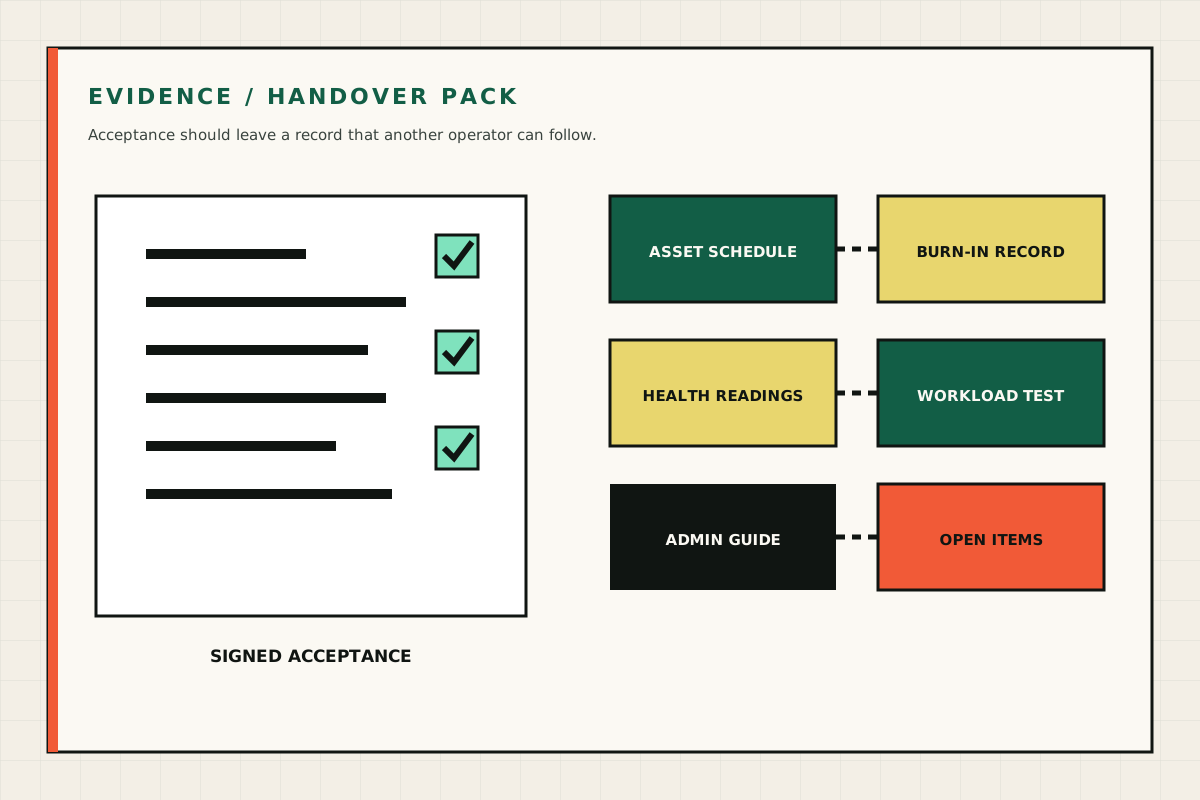
Acceptance bench
Quality and service conditions pass together
Power economics need a measured queue
Electricity is driven by loaded kW and hours, with cooling overhead. Measure wall power and completed useful work rather than estimating from GPU TDP alone.
The calculator uses 24.14p/kWh as a dated editable UK business input.
Operating loop
The workload continues after the first demonstration
- Observe Demand, errors and resource state.
- Review Quality drift, access and incidents.
- Change Versioned model or runtime update.
- Retest Focused acceptance before wider use.
Marketplace mode is off by default
Vast.ai, Render or Golem can be evaluated only for genuinely spare capacity, after security, warranty, insurance and workload-priority review.
No marketplace income appears in the base business case.
Questions answered
Straight answers to common questions
Can an old mining rig become a render server?
Potentially for independent workers after exact compatibility, stability, power and thermal testing. The host platform limits still matter.
Can spare GPUs earn money?
Possibly, but acceptance, demand, rate and availability are not guaranteed. Treat it as a measured opt-in pilot, not purchase justification.
Is rendering included in the AI server package?
The hardware can support agreed render or batch profiles, but application licences, queue integration and workload tests require scope.
Primary-source register
Check the live rule or price before relying on it.
Reviewed 26 July 2026. These links support the dated statements on this page; they do not replace legal, tax, security or professional advice.
Continue the decision
Useful next steps
Put the claim to work
Turn this guidance into a testable requirement.
The brief asks about workload and operating conditions - not just budget.