A shared service, not just loaded weights

Build an inference server around latency, throughput and recovery.

An inference server runs trained models for people or applications, but the hardware is only one dependency. The request boundary, queue, worker profile, telemetry and recovery route determine whether it is a usable service.

Decision in one minute

Use this page when the service-level question is primary: how requests enter, wait, complete, fail and recover under representative demand.

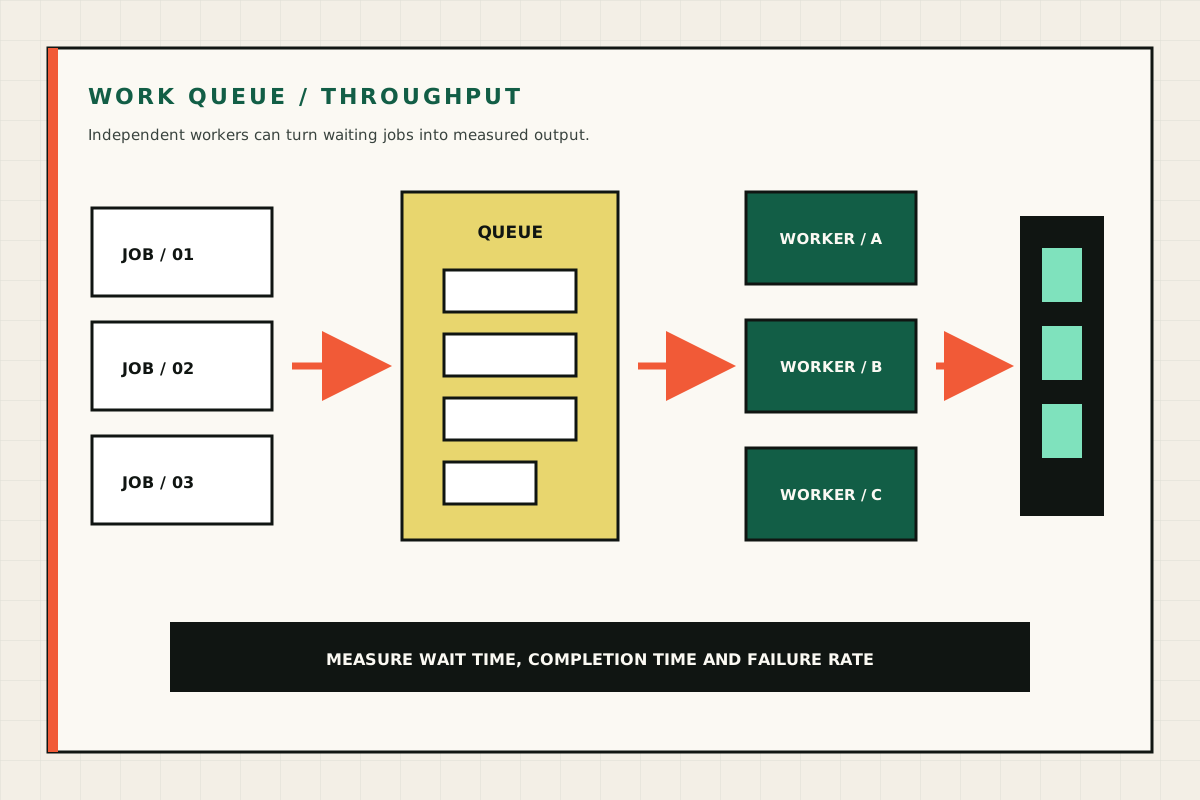
Diagram showing jobs entering a queue, being assigned to independent workers and producing measured outputs
Queued rendering, batch and coding work can be divided between workers, with waiting time and failures measured. Original explanatory plate. It sets out a decision method, not a measured result.
Queued rendering, batch and coding work can be divided between workers, with waiting time and failures measured.

Inference service control plane

Design the request path, queue and recovery route.

Inference hardware becomes a shared service only when requests are authenticated, queued, assigned to a versioned model worker, observed and recovered against an agreed service target.

  1. 01

    Request boundary

    Authenticate the user or application and reject unapproved routes.

  2. 02

    Queue and policy

    Apply limits, priority, timeouts and model-routing rules.

  3. 03

    Model worker

    Serve the pinned model, runtime, context and batching profile.

  4. 04

    Response and record

    Return the output while recording errors, latency and permitted logs.

  5. 05

    Recovery

    Restart, roll back or use an approved fallback when the service fails.

Acceptance board

Measure the service under the demand it must survive.

Record the model, runtime, hardware, context, batch profile and test date beside every result. A number without its conditions is not a buying claim.

Inference server acceptance measures
Measure Decision question Evidence record
Latency How quickly must useful output begin and finish? Median and tail results under stated conditions
Throughput How much accepted work must complete in a period? Requests, tokens or jobs with the model and batch profile
Concurrency How many active sequences overlap at the real peak? Queue time, cache use and rejection behaviour
Recovery What happens after a worker, runtime or model failure? Health check, restart, rollback and approved fallback
GPU server remote management dashboard with system status, access logs and sensor monitoring panels
Supplier screenshot of the platform management interface. The final management features and access policy depend on the ordered system. OEM supplier reference image. Written reuse permission pending.
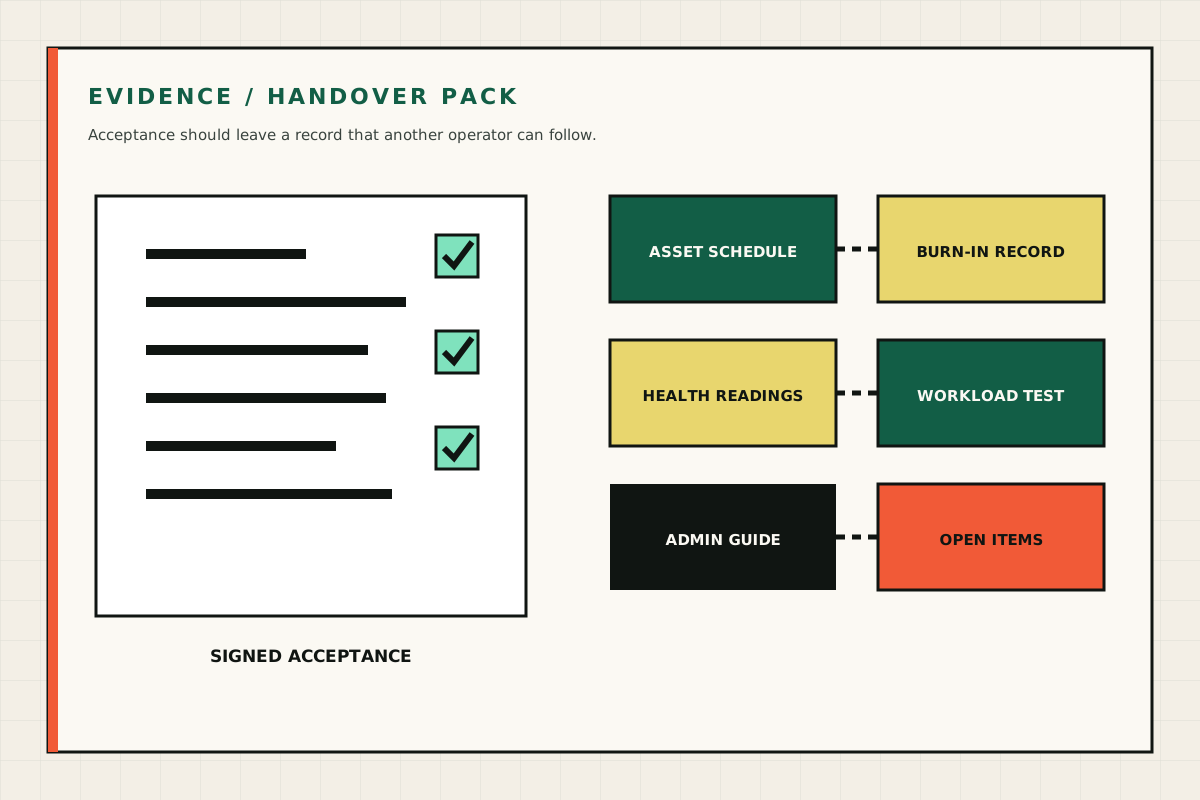
Diagram of an evidence pack containing an asset schedule, burn-in record, health readings, workload test and admin guide
A credible handover records the supplied assets, checks, operating evidence, instructions and unresolved items. Original explanatory plate. It sets out a decision method, not a measured result.
Three-quarter supplier render of a 4U OEM multi-GPU rack server
OEM platform reference render. It is not evidence of a completed customer build or final specification. OEM supplier reference image. Written reuse permission pending.

Operating service brief

The machine is only one dependency in the inference service.

01

Serving is different from experimenting

A developer can load a model on a workstation. A production-style service needs an API, identity, queues, timeouts, monitoring, version control and a recovery process.

The acceptance test covers representative prompts, context, concurrency and latency - not a best-case single request.

02

Throughput, latency and concurrency pull in different directions

Batching can improve total throughput while increasing individual response latency. Long contexts consume more memory. Several users can exhaust KV cache even when the base model fits.

The right answer may be one large endpoint, several independent workers or a routing layer across different models.

03

Private API, browser UI or both

Internal applications can use an OpenAI-compatible local API while staff use a reviewed browser interface. Access must be authenticated and scoped to the customer network.

API compatibility does not mean identical model behaviour. Applications still need model-specific evaluation and error handling.

04

A physical machine the customer owns

This proposition is not hourly hosted GPU rental. The customer buys the configured appliance and chooses where it runs.

Colocation may still be sensible for high-power systems. Ownership and physical location are separate decisions.

Questions answered

Straight answers to common questions

What is an AI inference server?

A server that loads trained AI models and serves outputs to users or applications. It is designed around response latency, throughput, concurrency and operational availability rather than model training.

Is an inference machine the same as an AI server?

Inference machine is a narrower phrase for hardware intended primarily to run trained models. AI server is broader and can include training, rendering, data processing and other GPU workloads.

How many users can one inference server support?

There is no responsible universal number. It depends on model, context, output length, quantisation, latency target and traffic pattern. The exact workload needs a concurrency test.

Primary-source register

Check the live rule or price before relying on it.

Reviewed 26 July 2026. These links support the dated statements on this page; they do not replace legal, tax, security or professional advice.

Resolve the service question

Define the request path and service target before choosing capacity.

Record latency, throughput, peak concurrency, access and recovery so the exact server can be tested against them.