Confidence should be traceable
Every important claim needs a source, test condition or visible label.
This proposition is still in validation. The evidence method separates what has been observed, calculated, assumed, recommended and gated so buyers are not asked to treat a plan as a proven outcome.
Use the evidence date and classification to decide how much weight a claim deserves. Ask for the exact test record before relying on performance.
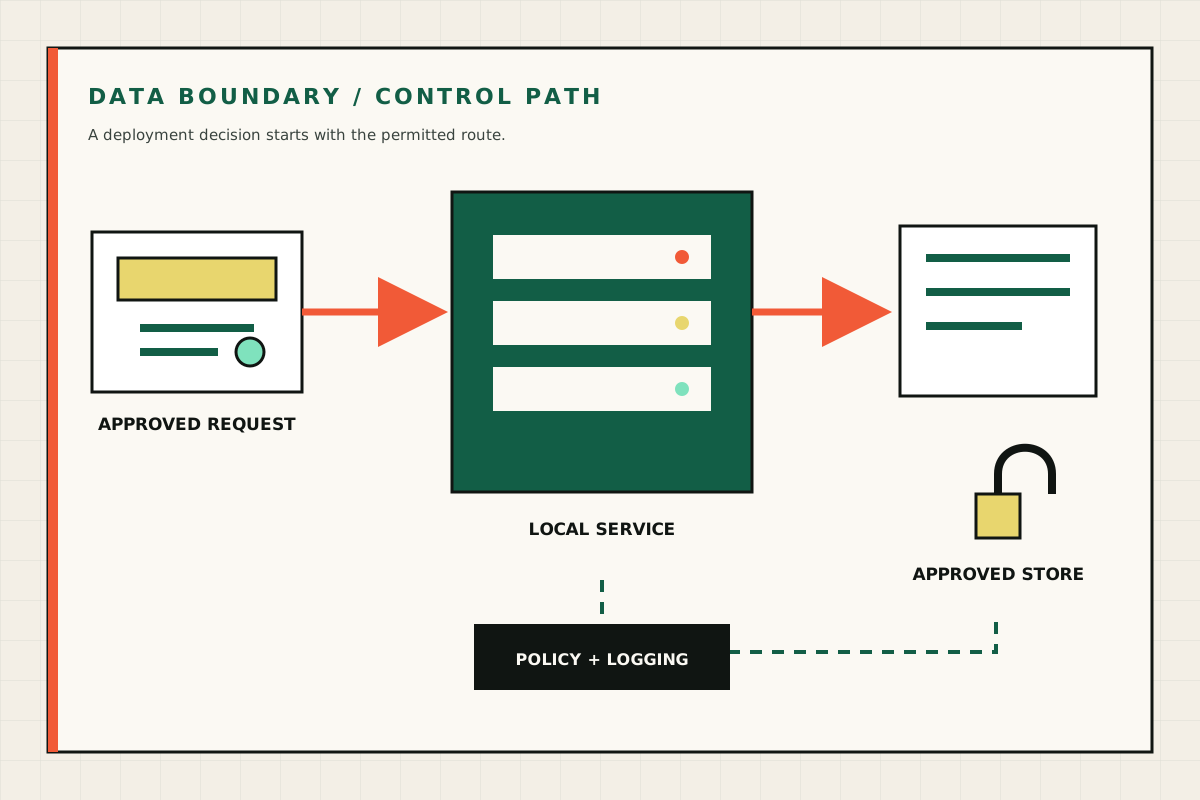
Operational ownership
The handover should make responsibility easier to see.
- 01 / Owner
- Name who controls updates, access, recovery and incidents.
- 02 / Record
- Make versions, tests and handover evidence visible.
- 03 / Exit
- Keep portability and supplier boundaries written down.

Five classifications
Observed claims come from a dated source. Calculated figures show their inputs. Assumptions are planning choices to test. Recommendations are proposed decisions. Gates are evidence required before sale or publication.
A confident sentence without one of those routes does not belong in a high-value infrastructure purchase.
Change record
A controlled change leaves an evidence trail
- Request Reason, owner and affected service.
- Test Focused acceptance and rollback plan.
- Approve Named person accepts the change.
- Record Version, date and result retained.
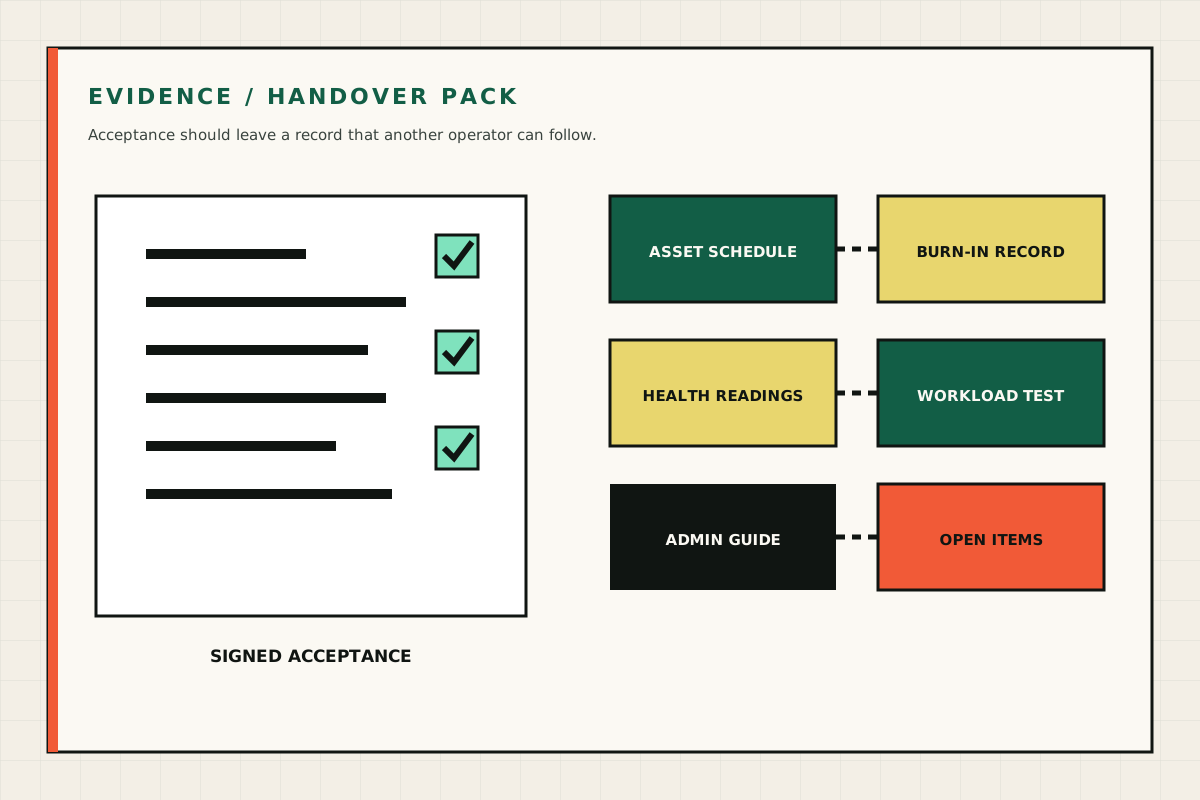
Look behind the claim at the operating record.
Management, recovery, evidence and physical serviceability make responsibilities easier to inspect at handover.
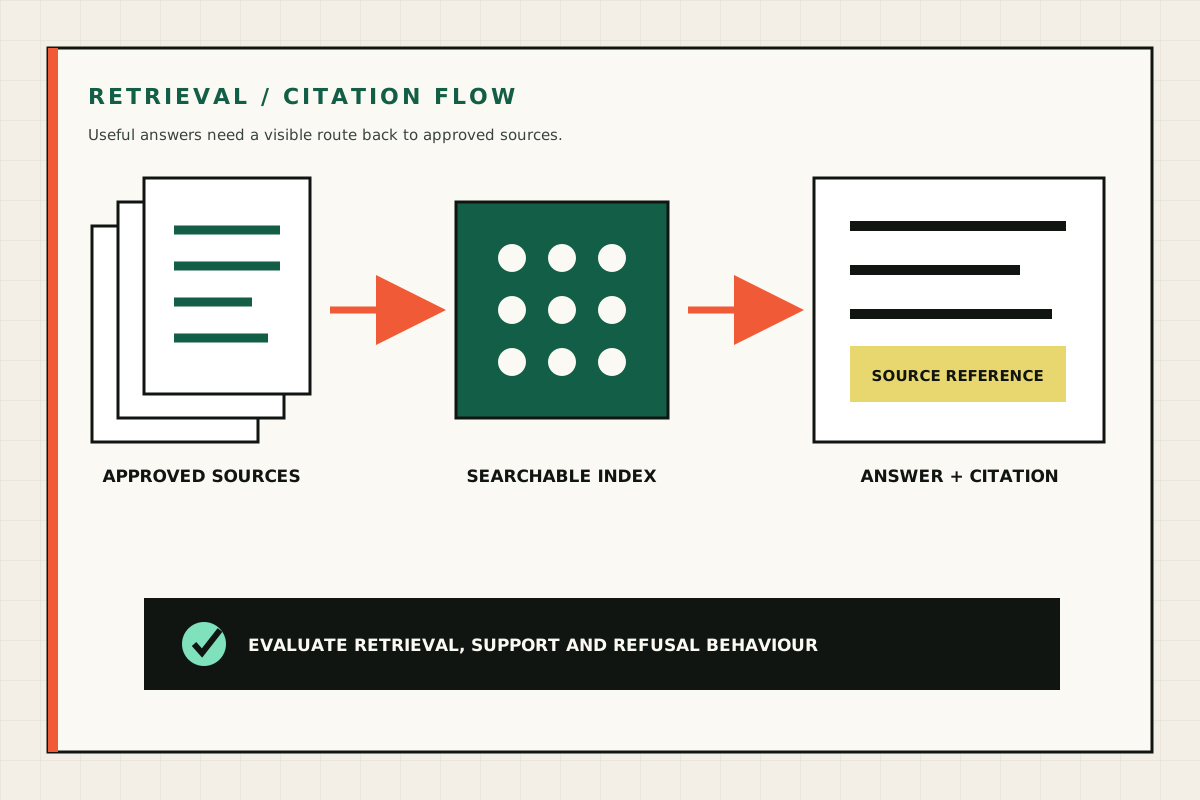
Benchmark conditions matter
Model, quantisation, runtime, driver, prompt, context, output length, batch, concurrency and hardware configuration all affect results.
The reference build must publish those conditions and raw summary evidence. This site does not invent tokens-per-second numbers while the build is untested.
Recovery boundary
Recovery spans equipment, configuration and business data
- Equipment Hardware fault and warranty route.
- System Build record, settings and secrets.
- Data Backup, retention and restore authority.
- Service Fallback, incident and return to use.
Commercial data expires
Supplier prices, stock, exchange rates, API prices, marketplace terms and competitors can change quickly. Pages show a review date and high-risk claims require monthly or pre-campaign checks.
A customer quote uses a fresh supplier position, not a value copied from an old page.
Exit path
Ownership should preserve a practical route out
What remains unproven today
OEM terms, exact delivered COGS, whole-system warranty, reference benchmarks, customer demand, support capacity and any UK integration partnership remain gates.
Publishing those unknowns is more useful than disguising them as small print.
Questions answered
Straight answers to common questions
Are the package prices final?
No. They are proposed prices calculated from dated public supplier inputs and explicit allowances. A final order needs a current quote.
Where are the performance benchmarks?
They will be published only after the exact reference configurations pass the documented protocol.
Do you have customer case studies?
No permissioned customer cases are claimed in this validation build. Future case studies must identify real outcomes and conditions.
Continue the decision
Useful next steps
Put the claim to work
Turn this guidance into a testable requirement.
The brief asks about workload and operating conditions - not just budget.