
Standard office route
Team 32
1 × 32GB GPU · 64GB RAM · 2TB NVMeA proposed single-GPU tower for local development, proof work and lighter shared use.
Inspect proposed systemUser-adjacent AI and LLM systems
A one- or two-GPU workstation is a different operating choice from a 4U server. Direct access, office placement, acoustics and iteration speed can matter more than rack density or remote management.
Choose a workstation for hands-on development and one or two GPUs. Choose a rack server for shared services, density, remote management and sustained workers.

AI workstation selection desk
A workstation is not a small rack server. It is a user-adjacent development and production tool where direct access, acoustics, physical placement and one- or two-GPU practicality can outweigh density and remote operations.
A proposed single-GPU tower for local development, proof work and lighter shared use.
Inspect proposed system
A proposed dual-GPU alternative for two workers where a rack genuinely cannot be installed.
Inspect proposed systemForm-factor decision
| Decision | AI workstation | Rack GPU server |
|---|---|---|
| Placement | Desk-side or office floor | Server room, rack or colocation |
| Accelerators | Usually one or two active-cooled GPUs | Higher density and passive server GPUs where specified |
| Management | Direct desktop access and conventional remote tools | Dedicated remote management and service access |
| Resilience | Simpler single-system route | Redundant power and hot-swap features on suitable platforms |
| Best fit | Hands-on development and intermittent local work | Shared services, density and sustained independent workers |
Workstation operating notes
A tower is credible when its practical advantages are material, not simply because it avoids a rack.
Modern high-memory GPUs can run useful local chat, RAG, coding, image, speech and development workloads. A workstation can sit near the user and avoid server-room infrastructure.
It also makes testing and iteration easier when the user needs direct desktop access.
Rack systems provide GPU density, IPMI, server memory capacity, front-to-rear airflow and larger redundant power. They suit shared services and independent queues.
Those benefits come with noise, heat, electrical and support requirements that should never be concealed.
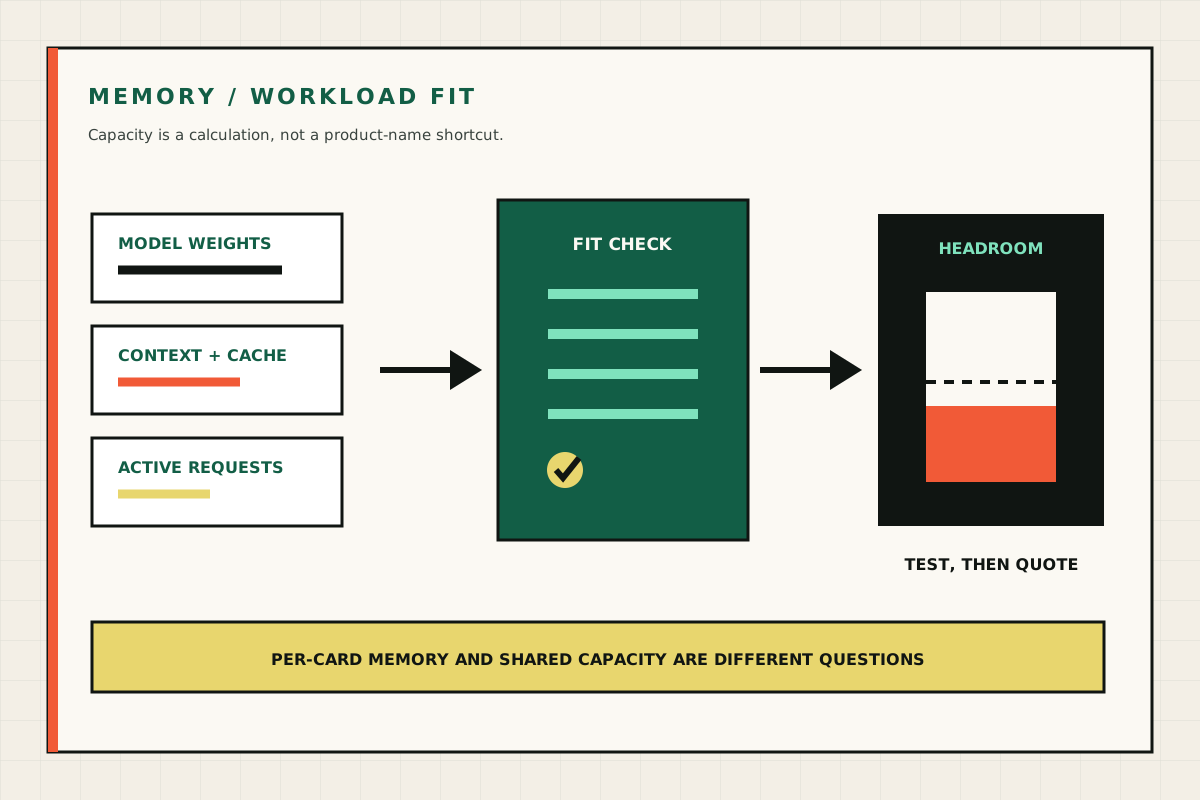
A tower still produces sustained heat and fan noise. The fit check must cover its position, ventilation clearance, room temperature, electrical load, local security and whether the user needs direct desktop access.
Exact acoustics and temperatures belong to the final build and workload test. A familiar office form factor is not evidence that a high-power configuration will be unobtrusive.
CREATE PCs and other UK workstation specialists publish materially lower prices than the proposed rack range. Some buyers should choose those routes.
Opace’s opportunity is the controlled appliance and evidence layer - not pretending every buyer needs the most expensive chassis.
Questions answered
Team 32 is the standard priced workstation proposal. Company 64 is a specialist alternative outside the main range. Neither is stocked or publicly launched; a current quote, exact bill of materials and accepted workload still control any order.
Often, yes. The answer depends on model memory, concurrent use, data route and whether the machine can be operated securely.
Suitable systems can, but physical clearance, power, thermals, motherboard lanes and warranty all need validation in the exact build.
Continue the decision
Resolve the form-factor question
The requirements brief compares direct access and office fit with shared capacity, remote management and rack operations.