Question-led AI calculator
AI server ROI and ownership calculator.
Compare five-year cash cost, then apply the operational requirement that money alone cannot price: frontier quality, data control, offline work or the absence of a technical owner.
Next evaluation route
Calculate
- Owned-capacity TCO£0
- Hosted-service TCO£0
- Cash difference£0
- Owned equivalent per month£0
- Hosted seats at cash crossover0
This is not a model-quality, feature, security or compliance equivalence claim. It does not include tax relief or spare-compute income.
Calculation record
See what sits behind the result.
The controls are deliberately editable. Record the values used, the date and the source before relying on an output in a buying decision.
Method
- Owned TCO = purchase + finance + annual electricity, support and facility costs for the selected term − supported residual value.
- Hosted TCO = paid users × monthly seat cost × 12 × term + monthly API/cloud spend × 12 × term + hosted implementation.
- The route recommendation applies the selected operational priority after the cash comparison.
Worked reading
- The defaults compare a £27,500 reference system with £4,000 annual operation against 25 seats, £500 monthly API/cloud use and £5,000 implementation.
- Change the term to see whether a shorter decision horizon changes the cash result.
- Run downside cases for higher electricity, support and finance costs.
Do not infer
- A hosted service can include current frontier models and managed product features that a local system does not reproduce.
- An owned system needs accepted local models, a technical owner, updates, backup and a suitable location.
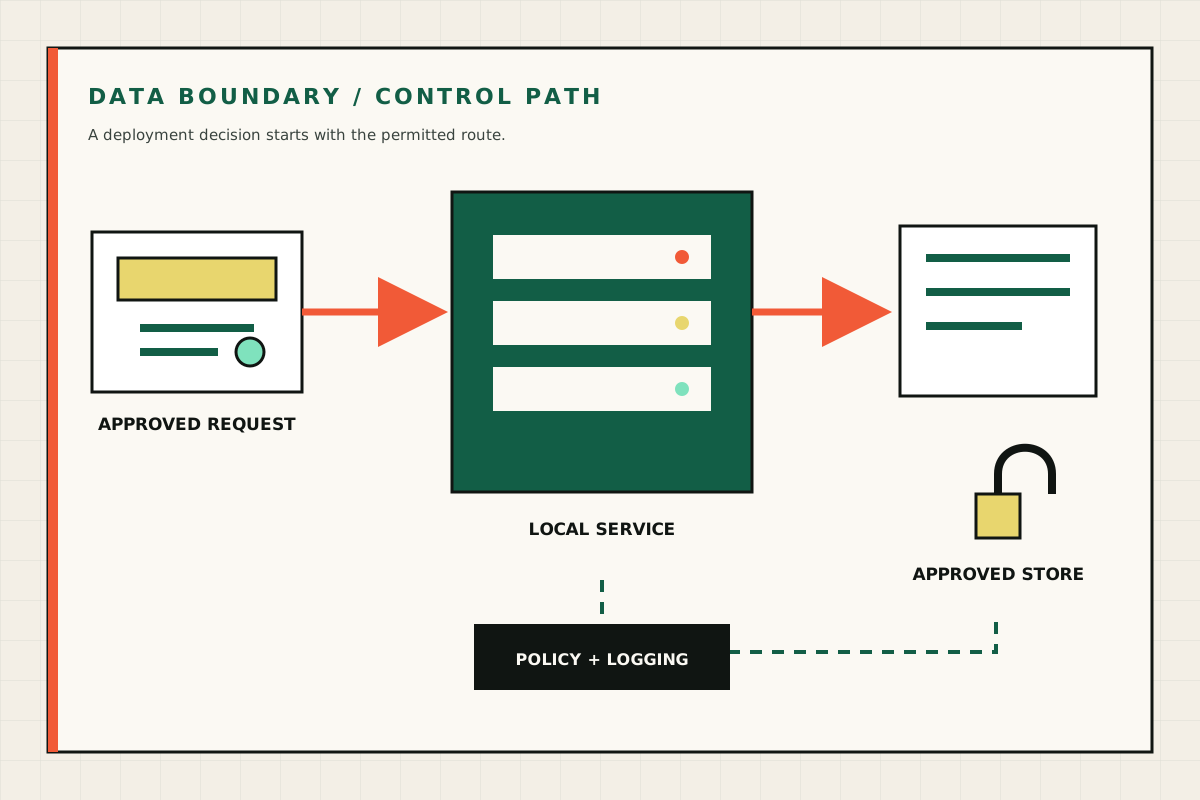
- A cash crossover does not assign a monetary value to confidentiality, offline operation, continuity or provider flexibility.
Use the route, not just the difference
Hosted AI normally remains the strongest starting point for a light-use team, a buyer that needs the latest provider models, or an organisation without a technical owner. Owned or hybrid capacity becomes more credible where sensitive data paths, offline operation, sustained shared workloads or version control have independent value.
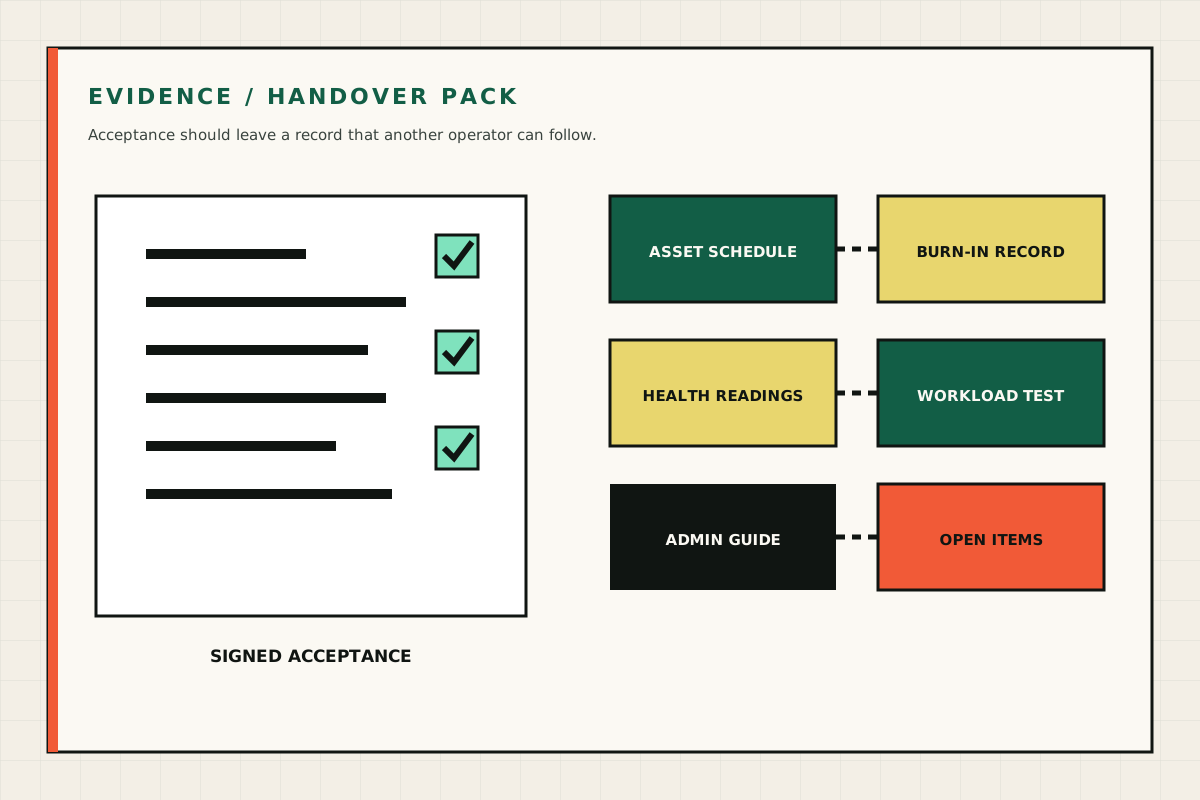
The next step is a representative workload proof. Measure model quality, latency, concurrency, memory, energy and operating effort before a final specification or savings claim.
The machine, its operating boundary and the work it serves.
Hardware close-ups and original technical plates separate physical evidence from proposed application design. Captions state what each view can and cannot prove.