Confidentiality needs architecture and judgement
Private legal AI that can show where an answer came from.
Legal teams handle privileged, personal and commercially sensitive material. A private route can reduce external disclosure, but professional judgement, matter permissions and governance remain essential.
Start with an internal, low-risk research or knowledge workflow. Do not automate legal advice or client decisions without appropriate controls.
Sector fit
Start with duties and data boundaries, then test one useful workflow.
- 01 / Duty
- Map confidential data, professional duties and approvers first.
- 02 / Pilot
- Use one bounded workflow and representative, permitted material.
- 03 / Control
- Retain human review, access ownership and an evidence trail.
Good first workflows
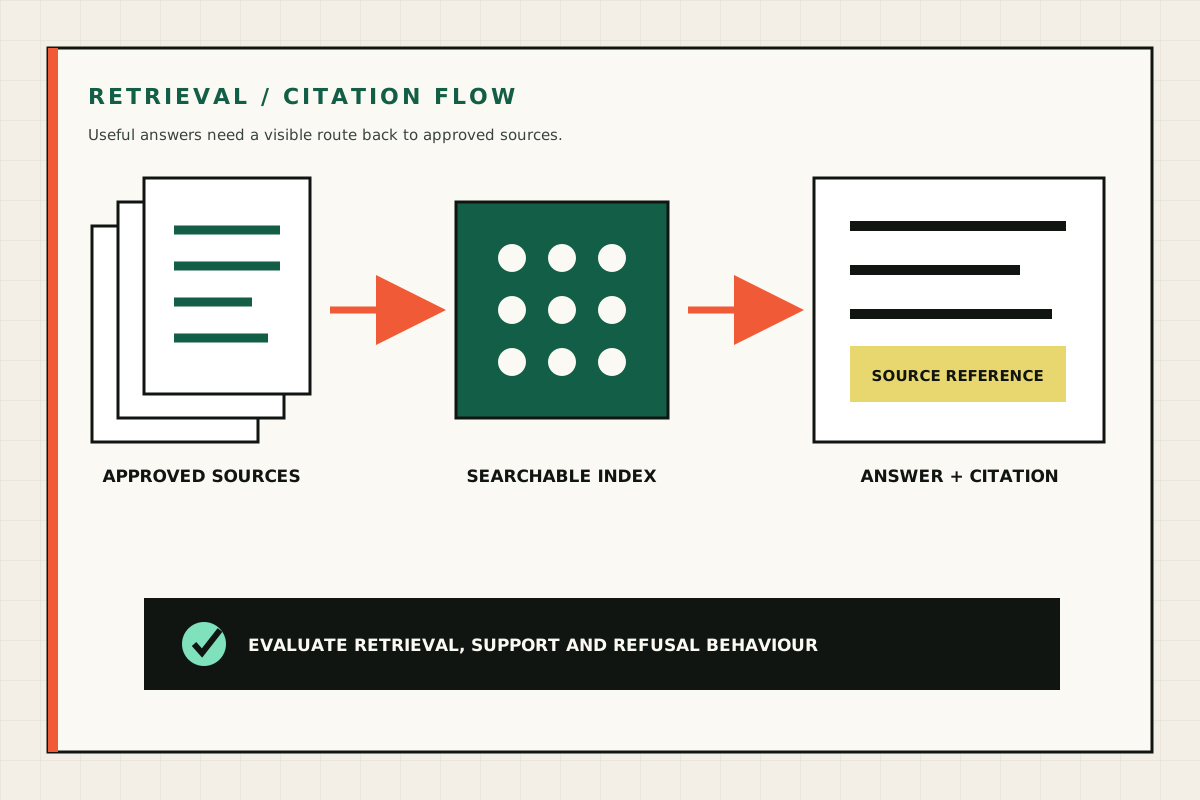
Internal precedent and policy search, chronology support, document classification, first-pass summaries and drafting assistance can be tested against source evidence.
The output should cite the matter-approved material and remain subject to qualified review.
Human checkpoint
Automation stops before the accountable decision
- Assist Search, extract, classify or draft.
- Cite Show the evidence used where applicable.
- Review Authorised person checks the result.
- Decide Accountable role accepts or rejects.
Keep the operating boundary in view.
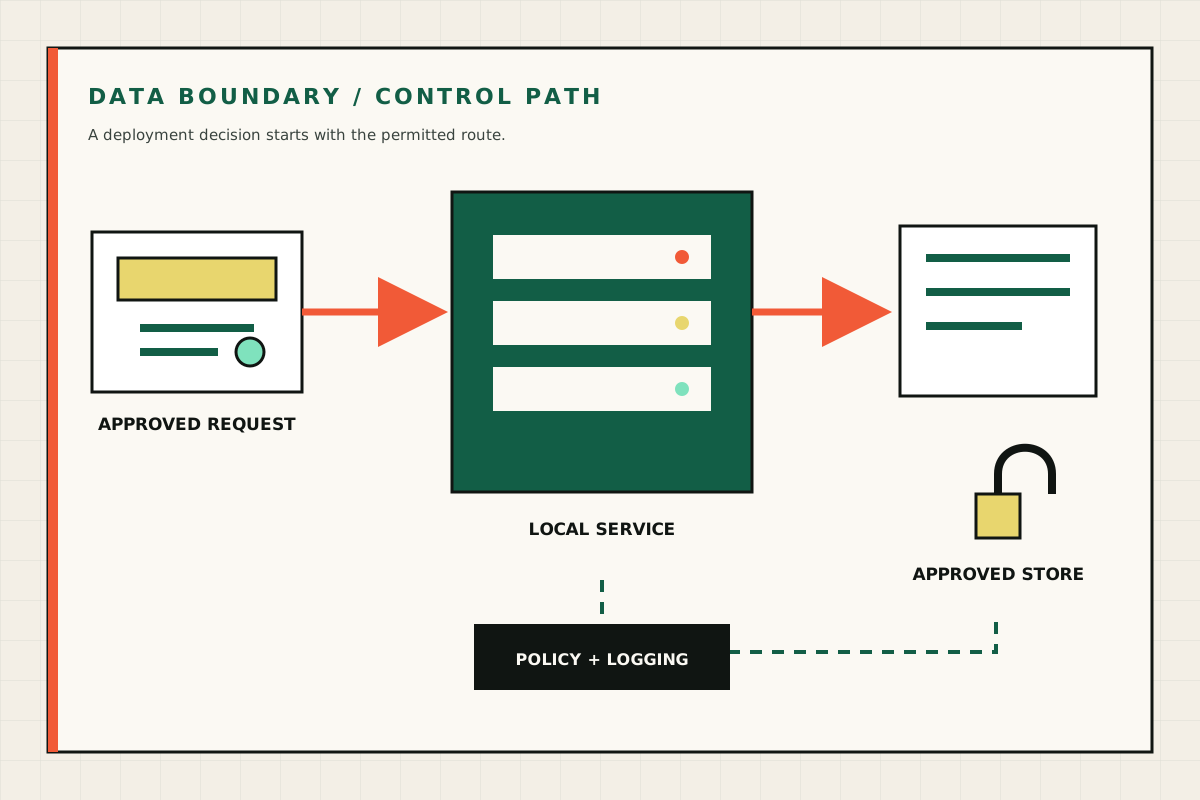
Technical plates show where data, review and evidence sit without inventing a sector customer or deployment.

Matter-level permissions
An index must not flatten ethical walls or matter restrictions. Retrieval needs group-aware access or separate stores.
User identity and access reviews remain customer responsibilities.
Evidence layers
A sector claim needs more than a plausible demonstration
- Reference pattern
- Reasoned but not customer proof.
- Bounded pilot
- Permitted material and pass conditions.
- Witnessed result
- Conditions and reviewer recorded.
- Permission
- Publication scope agreed in writing.
Accuracy and privilege
Fluent output can be wrong. Evaluation needs refusal, citation and escalation criteria.
Local hosting does not by itself preserve privilege or satisfy SRA, client or cyber-insurer expectations.
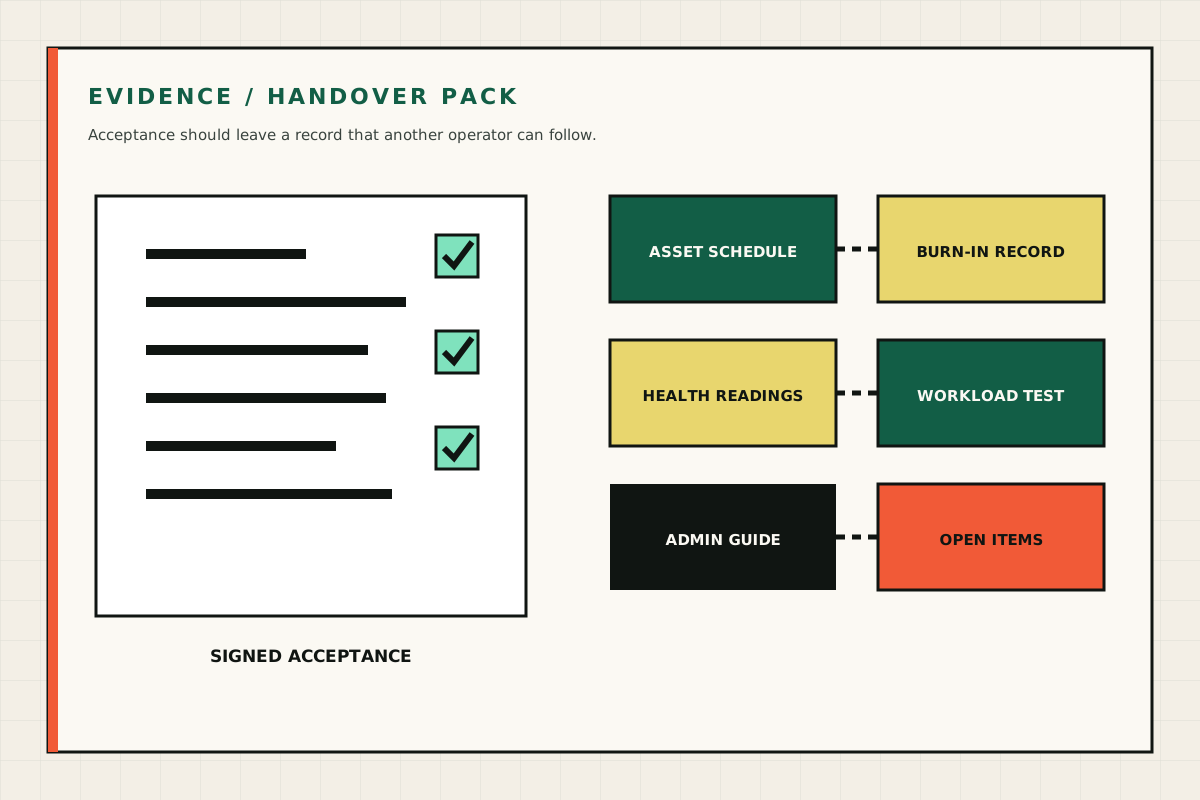
Pilot record
Keep the first deployment deliberately narrow
- Owner Data, process and technical roles named.
- Material Representative and permitted scope.
- Boundary Decisions the service may not make.
- Expansion Evidence required before wider use.
A bounded pilot
Use a representative, de-identified or authorised document set and a written question set. Record answer support and reviewer effort.
Scale only when the quality and governance case survives.
Questions answered
Straight answers to common questions
Does private AI protect legal privilege?
Architecture can reduce external disclosure, but privilege depends on legal and operational circumstances. Obtain legal and professional guidance.
Can it draft legal documents?
It can assist with approved drafting workflows, but every material output needs qualified review and source checks.
Is the system SRA approved?
No such claim is made. A firm must assess its professional, data-protection, security and client obligations.
Primary-source register
Check the live rule or price before relying on it.
Reviewed 26 July 2026. These links support the dated statements on this page; they do not replace legal, tax, security or professional advice.
Continue the decision
Useful next steps
Put the claim to work
Turn this guidance into a testable requirement.
The brief asks about workload and operating conditions - not just budget.