Local control, practical limits
Run useful AI locally - without pretending local is always better.
Local AI places the model and approved data on customer-controlled hardware. It can improve control, predictability and offline capability, but the customer also owns operations, energy and lifecycle.
Choose local when the workload and control case are strong. Use hybrid when a local default and an approved hosted exception give the best balance.
Buyer field note
Let the work and the room reject the wrong machine.
- 01 / Fit
- Start with the accepted task, not a chassis or GPU headline.
- 02 / Site
- Check power, cooling, noise, network and maintenance access.
- 03 / Alternative
- Keep cloud, colocation or a smaller system in the decision.
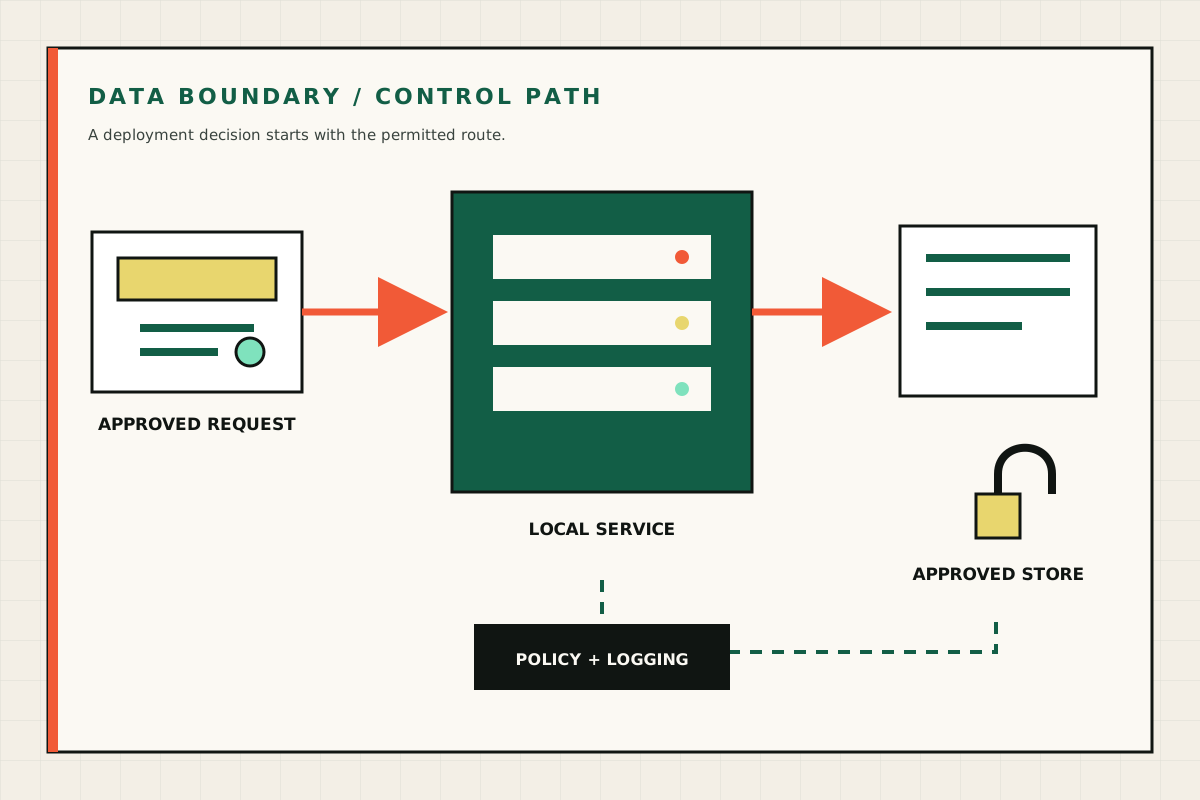
What stays local
The agreed model, prompts, retrieval index, documents, logs and output can remain within the customer’s defined environment.
External connectors, updates, telemetry and fallback models must be individually identified; “local” should not be a vague blanket claim.
Capacity budget
Memory demand has more than one layer
- Model
- Weights and quantisation.
- Context
- Working input and cache.
- Concurrency
- Simultaneous active work.
- Headroom
- Operations and change allowance.
Connect the category to the physical and operating system.
Platform views and technical plates show what must be tested beyond a product label or aggregate specification.

What the business takes on
Owned hardware needs power, cooling, monitoring, updates, backup, support and a replacement path. Someone must own identity and daily availability.
The fit check includes those operational costs before comparing with a hosted service.
Site boundary
The room is part of the specification
- Electrical Circuit, protection and UPS policy.
- Thermal Airflow, room heat and cooling route.
- Network Access, bandwidth and isolation.
- Service Rack space, noise and maintenance access.
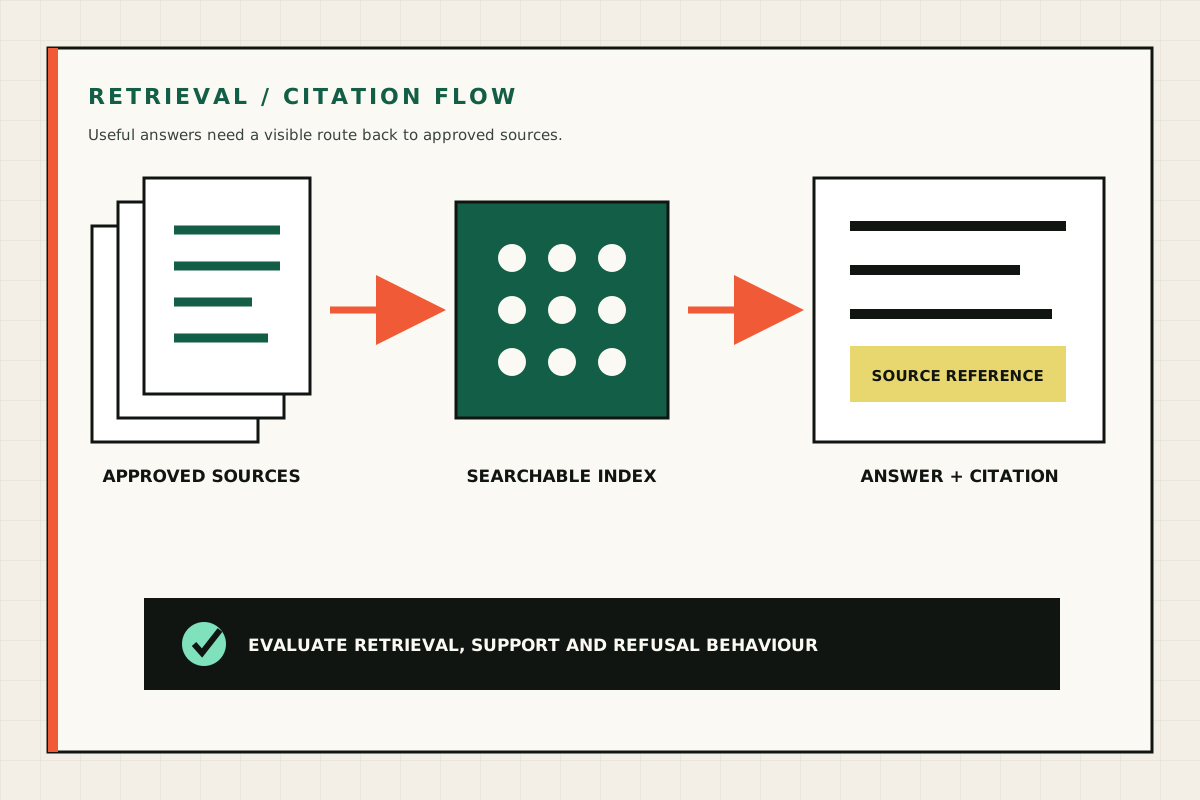
Open models can be excellent within a clear brief
Private document search, extraction, summarisation, coding and structured workflows are strong candidates. Some complex reasoning and multimodal tasks may still favour hosted frontier models.
Acceptance uses the customer’s representative examples rather than generic leaderboard claims.
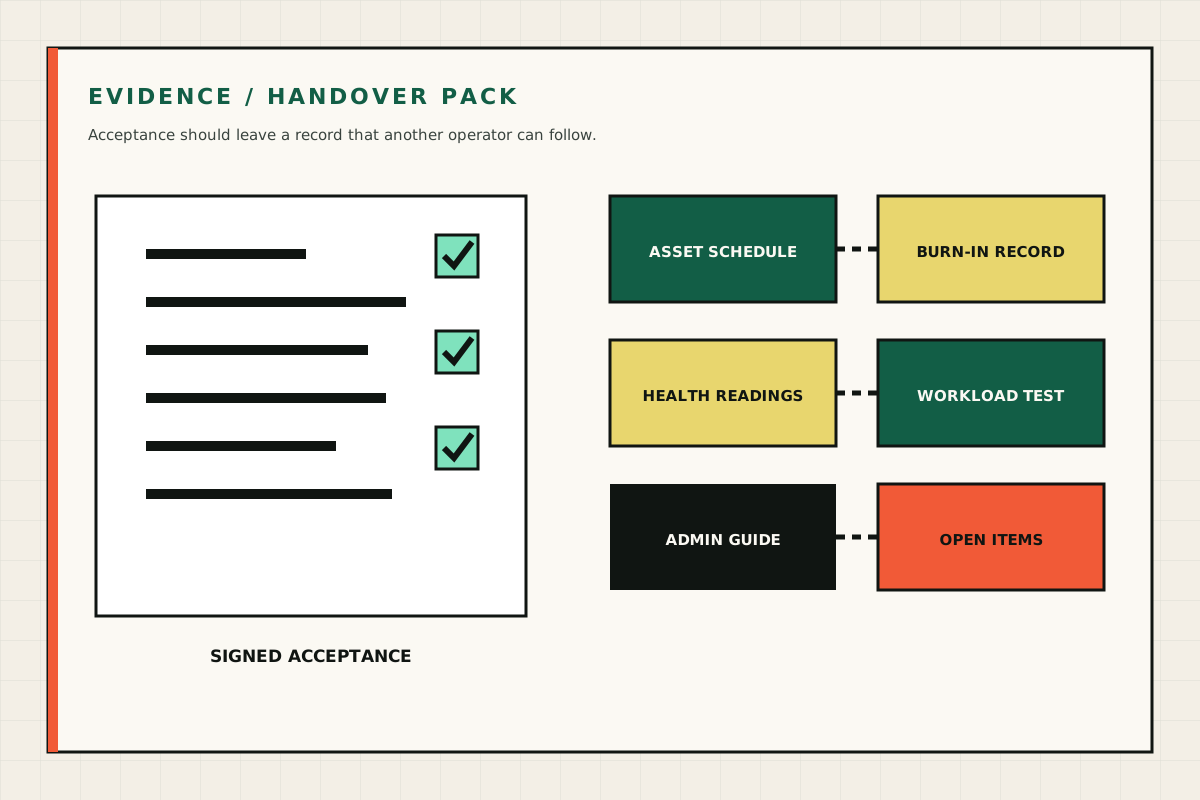
Procurement record
Make the route to acceptance inspectable
- Fit brief Workload and alternatives recorded.
- Reference test Conditions and results retained.
- Exact build Bill of materials and substitutions visible.
- Handover Owners, versions and exclusions signed off.
No GPU RIGS token meter
GPU RIGS does not propose a per-token charge for work run on customer-owned hardware. Electricity, support, model licences and any chosen hosted fallback remain real costs.
That distinction belongs in every TCO calculation.
Questions answered
Straight answers to common questions
What is a local AI server?
A physical server in a customer-controlled location that runs AI models for local users or applications rather than relying on a hosted AI endpoint for every request.
Is local AI private by default?
It can reduce external data sharing, but privacy depends on network, access, telemetry, connectors, logs and operating controls.
Will a private AI server always be cheaper than cloud AI?
No. SaaS is usually the better-value choice for a small team with light or irregular use. Owned capacity becomes more credible when privacy, offline operation, many shared users or sustained workloads have independent value. We show the comparison rather than forcing the server answer.
Continue the decision
Useful next steps
Put the claim to work
Turn this guidance into a testable requirement.
The brief asks about workload and operating conditions - not just budget.