Contribution model
Turn a headline rate into measured net contribution
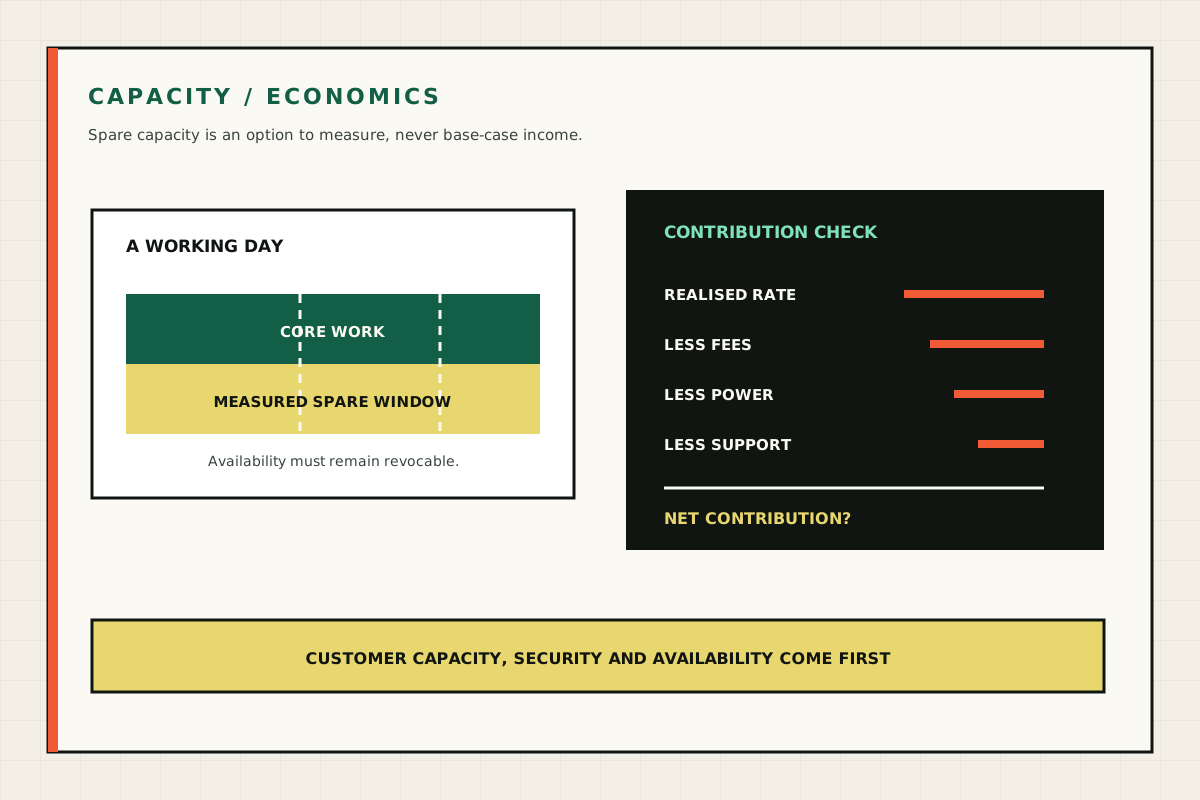
Availability is not rented utilisation. Use realised records from a bounded pilot and show every deduction.
- Hours × utilisation × rate Use achieved occupancy and the net realised hourly rate
- Measured incremental cost Wall power plus cooling and facility overhead
- Fees and operation Platform, payment, support, accounting and staff time
- Contribution after costs Before relying on it for any purchase decision
Run downside, central and capped upside cases. Keep all three outside the hardware justification until operating evidence exists.
Spare GPU capacity may be marketable through a compute marketplace or decentralised network. That does not make the income predictable, passive or suitable for every business-owned server.
Treat marketplace hosting as an isolated, opt-in experiment after the primary business workload is proven. Do not buy hardware because an earnings calculator makes the payback look attractive.
The routes are different
Vast.ai
Vast.ai operates a marketplace where hosts list compatible machines and set availability and pricing. The host remains responsible for hardware, networking, reliability and meeting platform requirements. Actual utilisation depends on demand and competitiveness.
Render Network
Render Network focuses on rendering jobs and has its own onboarding, compatibility and work-allocation process. Its public information warns that work and earnings are not guaranteed. A GPU purchase should not rely on future admission or job flow.
Golem and other networks
Decentralised compute networks vary in supported workloads, payment assets, client demand and operating maturity. Evaluate the current technical and commercial requirements directly.
Start with the security decision
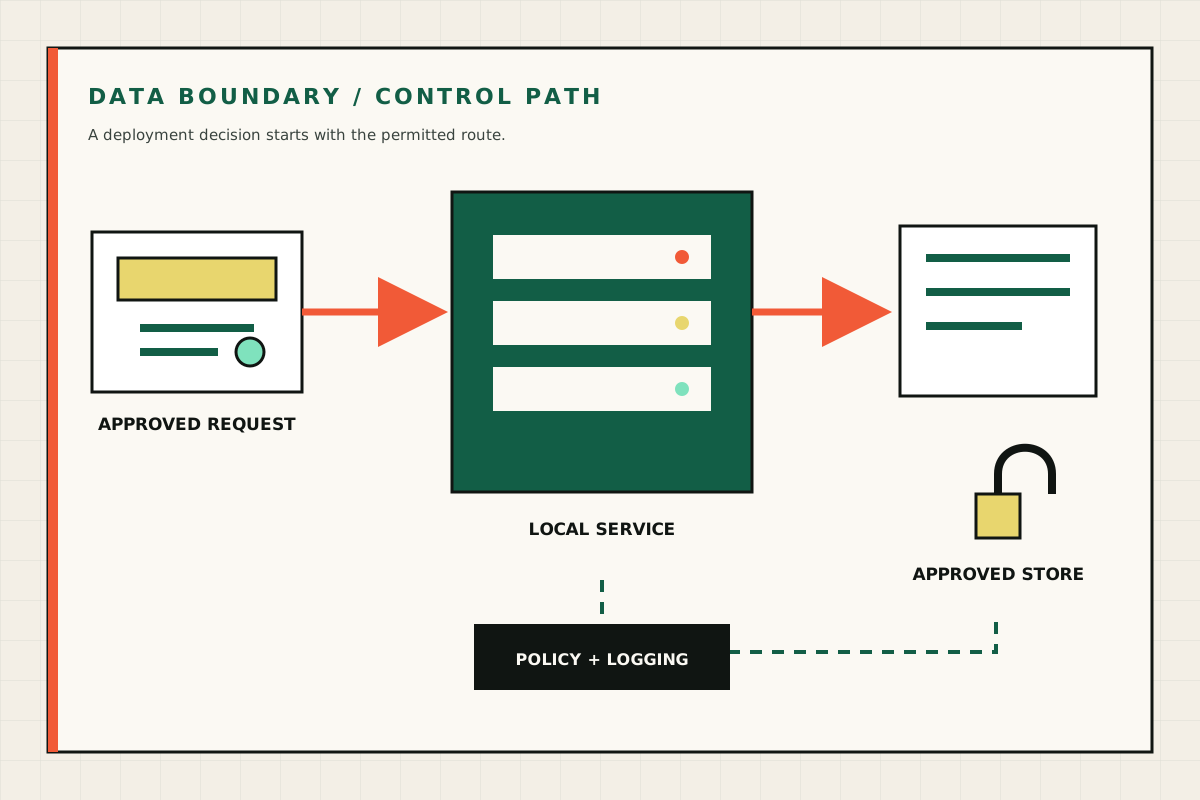
The customer’s private AI environment and third-party workloads should not share a trust boundary casually.
Consider:
- dedicated GPUs or a separate host;
- network and storage isolation;
- no route to business documents, vector stores or secrets;
- strong tenant cleanup;
- container and kernel exposure;
- administrative access;
- monitoring and incident response;
- whether marketplace software changes the support baseline.
Marketplace mode should be off by default and enabled only under a written policy.
Revenue is utilisation × realised rate
Gross monthly revenue depends on:
available hours × rented utilisation × realised hourly rate
Availability is not the same as utilisation. A server can be listed all month and receive little work. Headline market rates can differ from the rate the exact GPU, location, network and reliability can achieve.
Build at least three cases:
- downside: no accepted work or very low utilisation;
- central pilot: measured realised rate and modest utilisation;
- upside: stronger utilisation, clearly labelled and capped.
Exclude all three from the purchase justification until there is operating evidence.
Deduct the full contribution cost
Subtract:
- incremental electricity;
- cooling and facility overhead;
- marketplace fees;
- payment, exchange and withdrawal costs;
- tax and accounting;
- extra support time;
- additional hardware wear and downtime risk;
- insurance or warranty impact;
- cost of displacing the organisation’s own work.
An apparently positive gross figure can produce a weak or negative contribution.
UK tax, VAT and accounting
Marketplace receipts can create taxable trading income, VAT questions and records across cash, token or crypto payment routes. Crypto-denominated receipts can also require GBP valuation and later disposal records.
Obtain accounting advice before launch. Do not describe the activity as tax-free, a capital gain by default or a guaranteed offset against the server.
Warranty, insurance and contracts
Check whether third-party hosting:
- is permitted by the GPU and system warranty;
- changes support expectations;
- is covered by business insurance;
- conflicts with customer or data-security contracts;
- creates consumer, export-control or sanctions issues;
- requires service levels the organisation cannot meet.
A sensible pilot gate
Proceed only when:
- the primary workload has priority and a capacity schedule;
- technical isolation is designed and tested;
- current platform acceptance is confirmed;
- warranty and insurance positions are written;
- the accountant has reviewed the revenue route;
- wall power and incremental cost are measured;
- a stop-loss and review date are set;
- no customer outcome depends on the income.
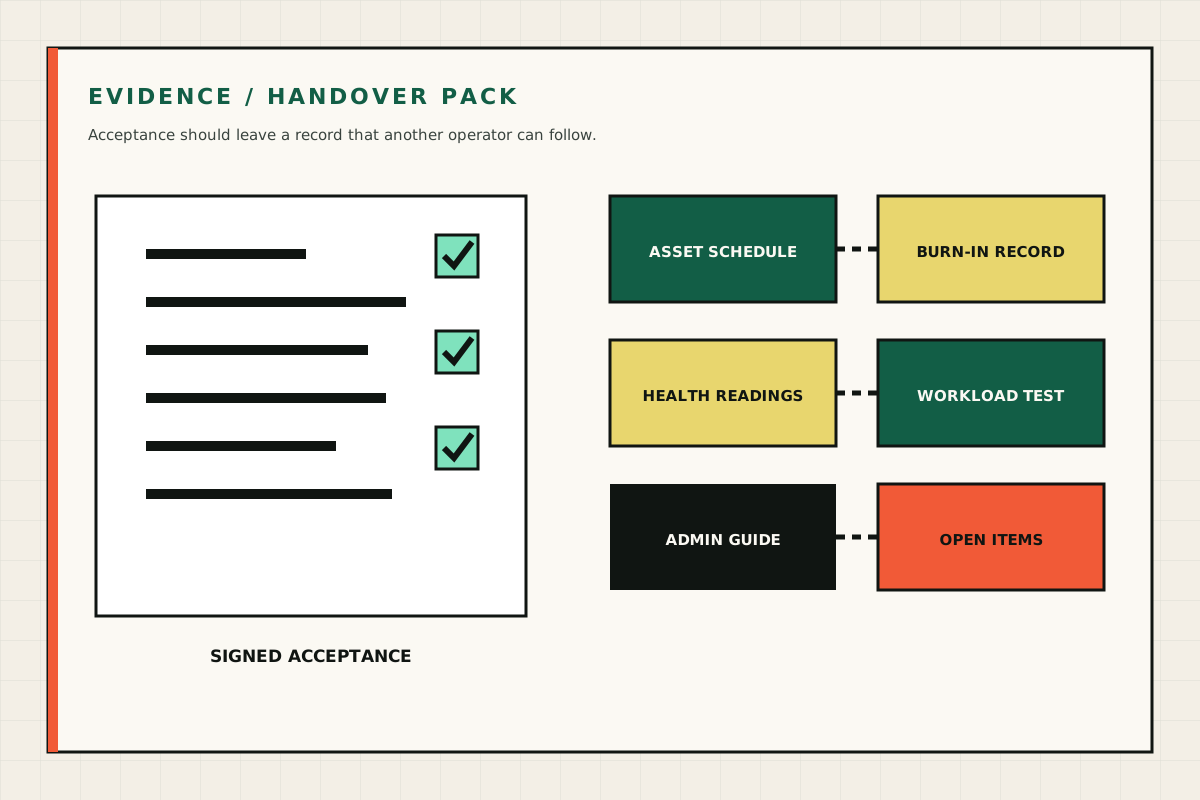
Run a short pilot. Record actual listed hours, rented hours, realised rate, energy, fees, incidents and staff time. Continue only if the measured net contribution justifies the risk.
Technical context
See the physical and operating boundary
Use these views to connect the guide to the machine, its airflow and its operating environment. Captions state the limits of what each image shows.

Pilot control
Set the stop conditions before listing capacity
A short pilot is useful only when success, risk limits and the review date are written in advance.
- Business priority Reserved capacity, schedule and immediate withdrawal route
- Permission to operate Current technical acceptance, warranty, insurance and contracts
- Complete ledger Listed hours, rented hours, rate, energy, fees and incidents
- Review threshold Maximum loss, security trigger and named decision owner
Continue only when measured contribution justifies the operational exposure. No customer outcome should depend on the income.
Primary sources
Sources are checked at the review date. Platform terms, prices and public guidance can change; verify them at the point of decision.