API convenience versus owned capacity
Compare the whole workload - not one token price.
The OpenAI API offers strong models, rapid integration and elastic usage. A local endpoint offers fixed owned capacity and greater control. They are not quality-equivalent by default.
Keep the API where frontier capability and burst elasticity matter. Consider local where approved workloads are sustained, repeatable and operationally owned.

Comparison discipline
Make unlike services answer the same business question.
- 01 / Scope
- Define the accepted outcome before comparing price.
- 02 / Equivalence
- A hosted frontier service and a local open model are not identical products.
- 03 / Evidence
- Record current prices, a representative workload and a review date.
Start with measured volume
Record monthly input, cached input and output tokens by use case. Separate experiments from repeatable production work.
A headline monthly bill without workload detail cannot size a local replacement.
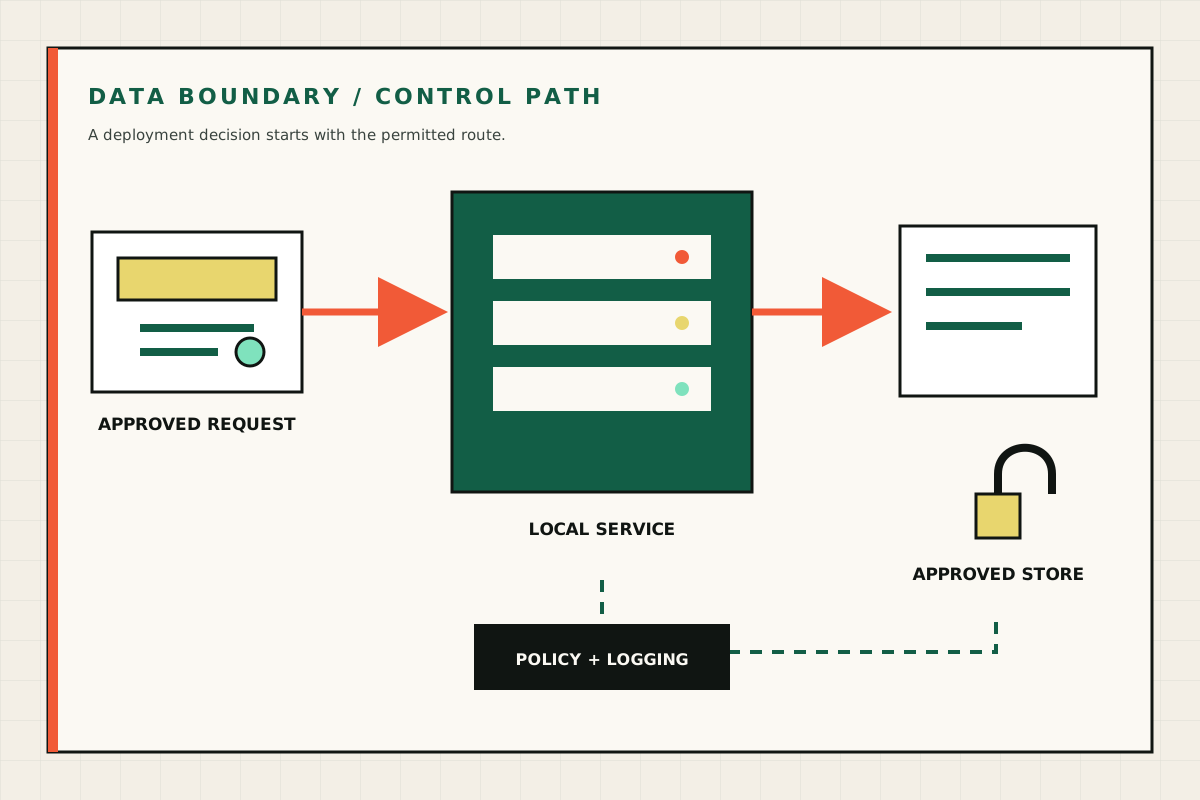
Data-route check
Trace what crosses each operating boundary
- Input Prompt, document, code or media.
- Processing Model, retrieval and temporary state.
- Record Logs, retained inputs and output history.
- Exit Deletion, export and supplier change.
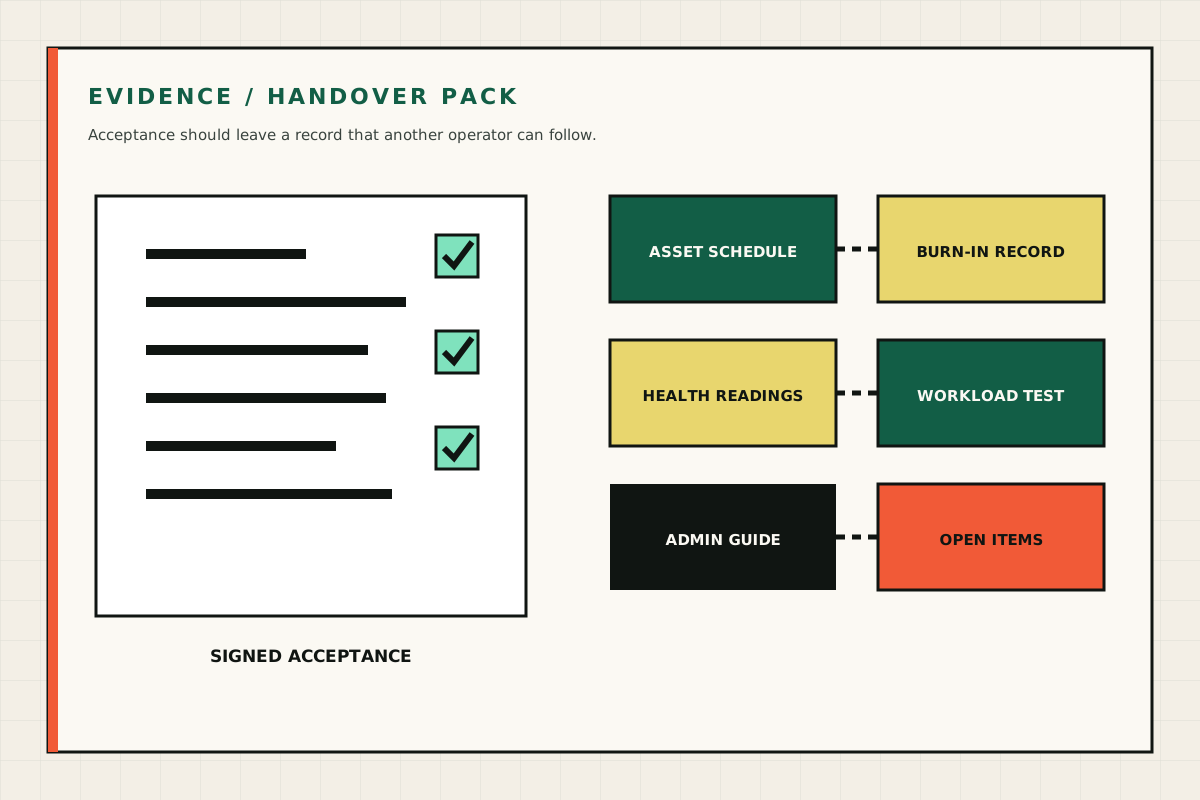
Put the operating architecture beside the price comparison.
Data boundaries, remote management and handover evidence help explain what each route asks the organisation to own.

Do not assume model equivalence
A lower local cash cost is irrelevant if the chosen open model fails the acceptance set. Quality, context, tool use and latency must be compared together.
Some organisations will retain the API for difficult exceptions.
Whole-life cost
Put every material cost in the same frame
- Access
- Seats, usage or capital.
- Operation
- Energy, support and facilities.
- Change
- Migration, integration and people.
- Risk
- Downtime, lock-in and obsolescence.
Control has value beyond break-even
Offline policy, predictable versioning, local data access or provider continuity may justify owned capacity even without a pure price crossover.
That value should be named rather than hidden inside an inflated savings claim.
Decision record
Keep the losing route visible
- Use case Bounded task and demand pattern.
- Winner Reason the selected route fits.
- Alternative Reason the other route was rejected.
- Review Date or trigger for comparison again.
Prices change
API models and prices are dated inputs, not evergreen facts. The calculator keeps hosted prices editable and shows the review date.
A procurement decision should refresh both hosted and hardware inputs.
Questions answered
Straight answers to common questions
Can a local server replace the OpenAI API?
It can replace accepted workloads where a tested local model meets quality, latency and integration requirements. It need not replace every request.
Will the local API be OpenAI-compatible?
The proposed stack can expose a compatible API shape, but model behaviour and supported features can differ.
How do we compare costs?
Include tokens, seats, hardware, finance, electricity, cooling, support, downtime and useful life. Set residual value to zero by default.
Primary-source register
Check the live rule or price before relying on it.
Reviewed 26 July 2026. These links support the dated statements on this page; they do not replace legal, tax, security or professional advice.
Continue the decision
Useful next steps
Put the claim to work
Turn this guidance into a testable requirement.
The brief asks about workload and operating conditions - not just budget.