A seat plan is often the right benchmark
For a small team, ChatGPT Business may be the better buy.
At the dated July 2026 exchange rate, the documented $20 annual-plan price is about £179 per user/year before VAT. That makes hosted seats hard to beat for light users.
Choose seats when users need a managed frontier product. Consider private capacity when control, offline operation, sustained shared usage or integrated local workflows justify it.

Comparison discipline
Make unlike services answer the same business question.
- 01 / Scope
- Define the accepted outcome before comparing price.
- 02 / Equivalence
- A hosted frontier service and a local open model are not identical products.
- 03 / Evidence
- Record current prices, a representative workload and a review date.
The simple seat comparison
Ten users over five years are roughly £8,953 before VAT at the dated input; 25 are roughly £22,381; 50 are roughly £44,763; 100 are roughly £89,525.
Those figures exclude implementation and future price changes, but they show why a £27,500 server is not an automatic saving.
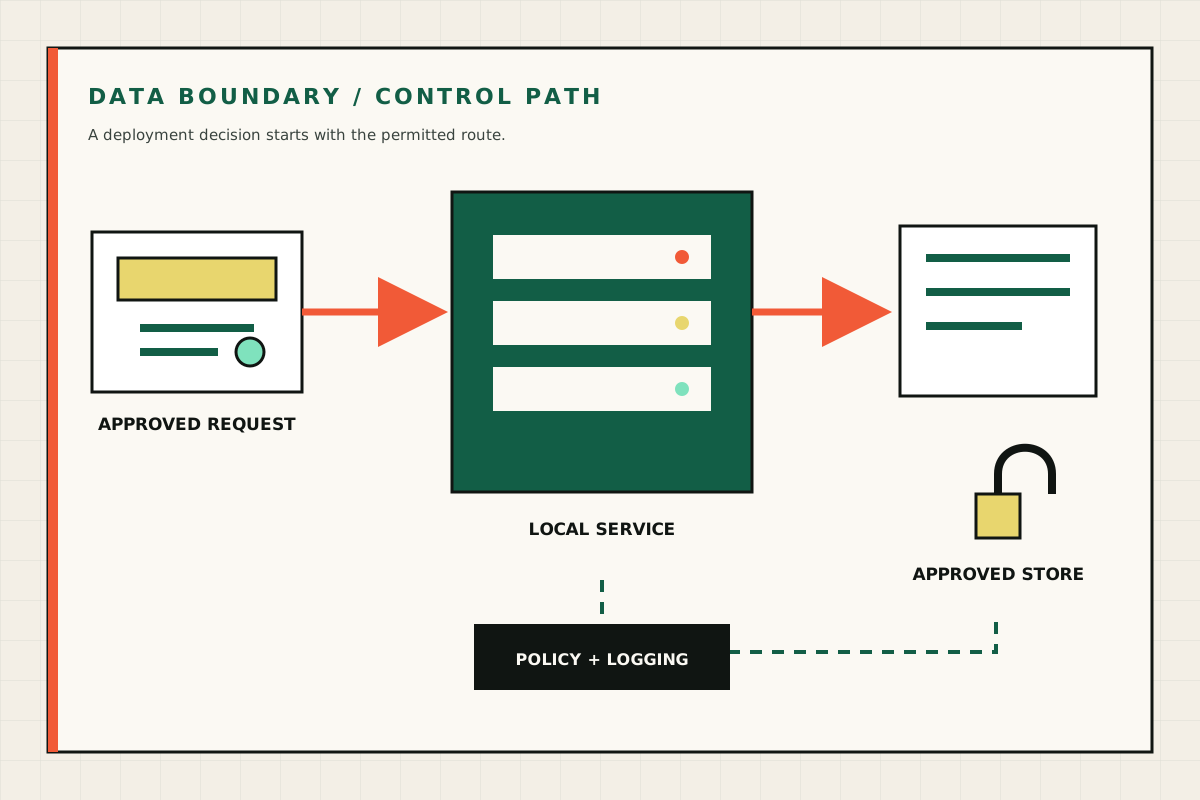
Data-route check
Trace what crosses each operating boundary
- Input Prompt, document, code or media.
- Processing Model, retrieval and temporary state.
- Record Logs, retained inputs and output history.
- Exit Deletion, export and supplier change.
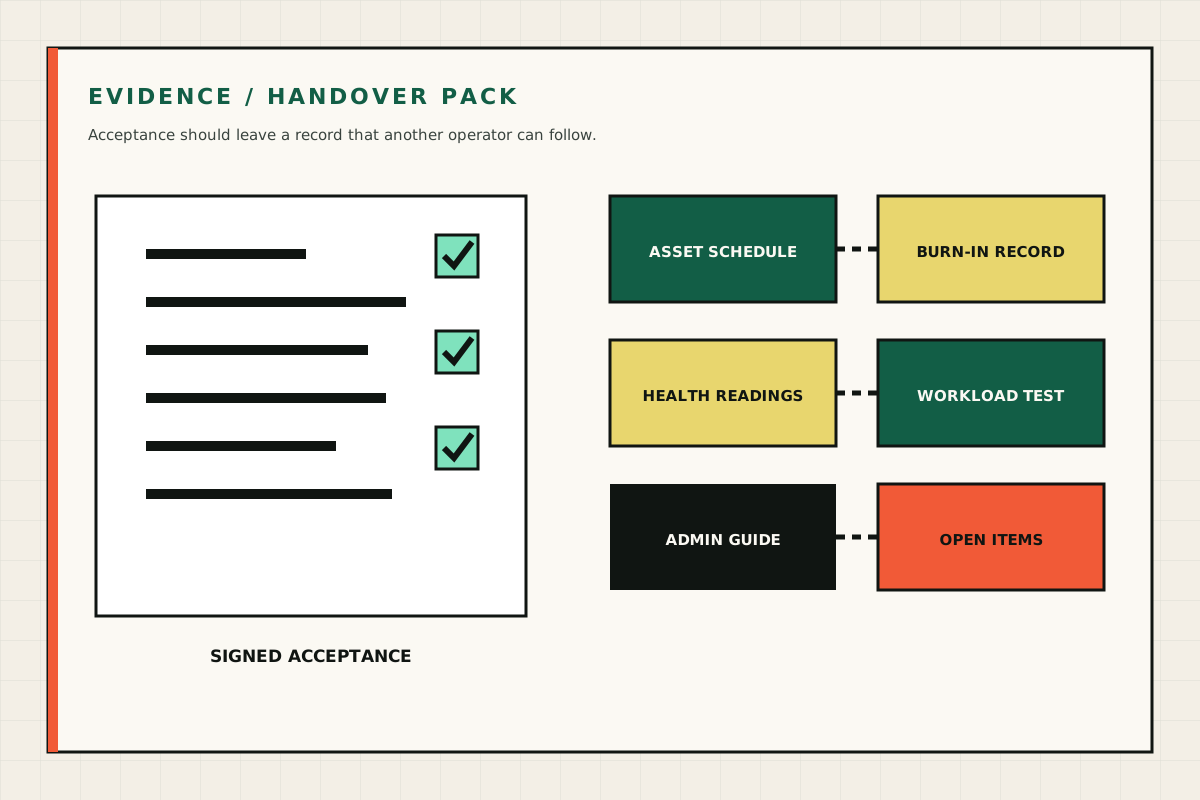
Put the operating architecture beside the price comparison.
Data boundaries, remote management and handover evidence help explain what each route asks the organisation to own.

The products are not the same
ChatGPT Business is a managed application with frontier models and collaboration features. A private server is capacity and a configured local application stack.
Compare the accepted business outcome rather than dividing hardware price by seats.
Whole-life cost
Put every material cost in the same frame
- Access
- Seats, usage or capital.
- Operation
- Energy, support and facilities.
- Change
- Migration, integration and people.
- Risk
- Downtime, lock-in and obsolescence.
Where private changes the decision
Sensitive document routes, offline needs, version control, local integrations and sustained workloads may have value independent of seats.
A local system also needs a technical owner and operational budget.
Decision record
Keep the losing route visible
- Use case Bounded task and demand pattern.
- Winner Reason the selected route fits.
- Alternative Reason the other route was rejected.
- Review Date or trigger for comparison again.
Hybrid can protect the investment
Routine accepted workflows can run locally while staff retain approved hosted access for exceptional tasks.
The organisation needs a policy for which data and task may use each route.
Questions answered
Straight answers to common questions
How many users make a private server cheaper?
There is no universal threshold. Use the TCO calculator with actual seats, workload, energy, support and useful life.
Is local AI as capable as ChatGPT?
Not automatically. The selected local model must pass a representative quality test. Some hosted models may remain stronger.
Does ChatGPT Business train on business data?
Provider terms should be checked directly at the decision date. The comparison here focuses on ownership and processing architecture, not a claim that business plans train on customer data.
Primary-source register
Check the live rule or price before relying on it.
Reviewed 26 July 2026. These links support the dated statements on this page; they do not replace legal, tax, security or professional advice.
Continue the decision
Useful next steps
Put the claim to work
Turn this guidance into a testable requirement.
The brief asks about workload and operating conditions - not just budget.