Complete system - not raw compute
An AI appliance should arrive with fewer unknowns, not bigger claims.
“AI appliance” describes a configured hardware and software system intended for a defined job. The phrase is useful only when the supplier makes the software, security, test and support boundary visible.
Buy an appliance when the value of a repeatable baseline and accountable handover outweighs the flexibility of a DIY build.

Buyer field note
Let the work and the room reject the wrong machine.
- 01 / Fit
- Start with the accepted task, not a chassis or GPU headline.
- 02 / Site
- Check power, cooling, noise, network and maintenance access.
- 03 / Alternative
- Keep cloud, colocation or a smaller system in the decision.
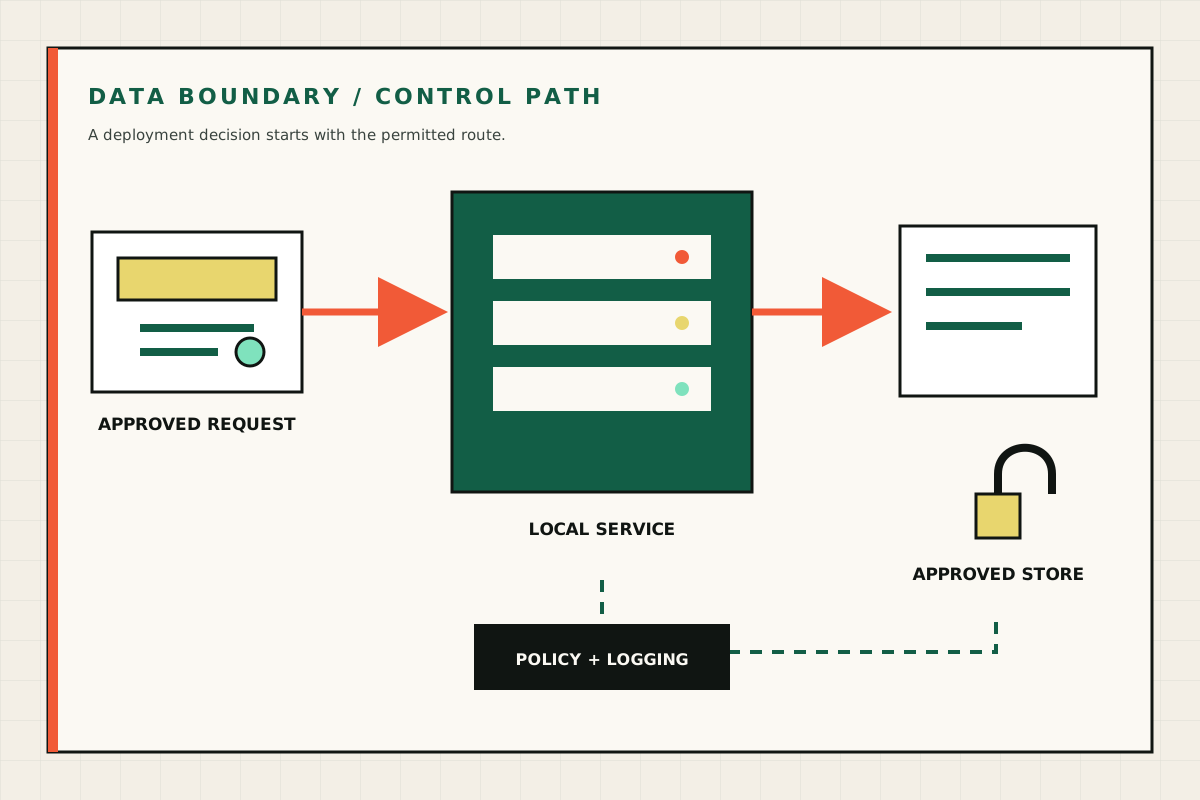
The appliance is the operating evidence
A chassis becomes an appliance when the versions, model source, access route, monitoring, backup expectations, acceptance tests and owner are documented.
Opace proposes an open-source baseline rather than a proprietary hardware key. Portability is a strength, but maintenance and licence review still exist.
Capacity budget
Memory demand has more than one layer
- Model
- Weights and quantisation.
- Context
- Working input and cache.
- Concurrency
- Simultaneous active work.
- Headroom
- Operations and change allowance.
Connect the category to the physical and operating system.
Platform views and technical plates show what must be tested beyond a product label or aggregate specification.

Configured for one agreed use, expandable later
The first release should solve a named problem: private document search, an internal coding endpoint, a speech queue or mixed GPU workers. Starting with “every AI workflow” makes acceptance impossible.
Once the baseline is stable, further models, integrations and users can be scoped against evidence.
Site boundary
The room is part of the specification
- Electrical Circuit, protection and UPS policy.
- Thermal Airflow, room heat and cooling route.
- Network Access, bandwidth and isolation.
- Service Rack space, noise and maintenance access.
Turnkey does not mean no technical owner
The customer still owns identity, network policy, backups, data governance, physical security and daily availability unless a separate managed service says otherwise.
Remote onboarding explains the system; it does not silently create a national installation or 24/7 support promise.
Procurement record
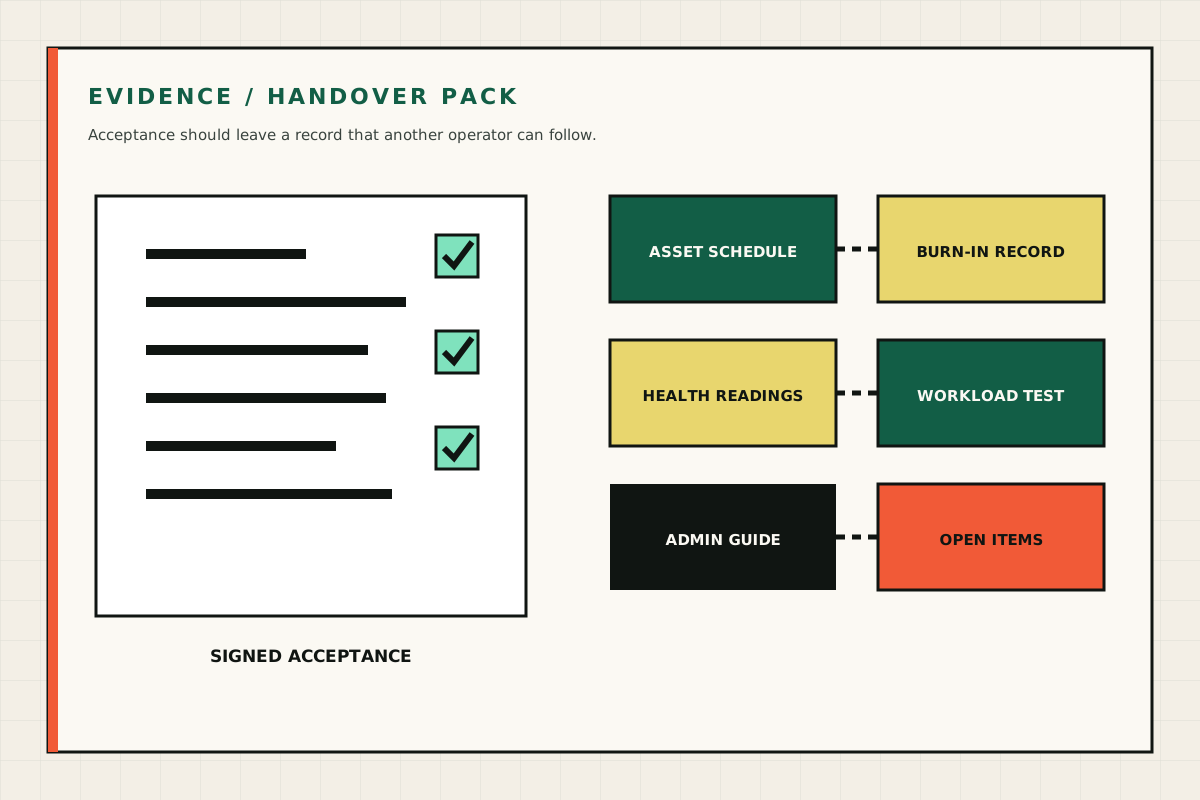
Make the route to acceptance inspectable
- Fit brief Workload and alternatives recorded.
- Reference test Conditions and results retained.
- Exact build Bill of materials and substitutions visible.
- Handover Owners, versions and exclusions signed off.
Transparent where other appliances are opaque
The proposed pages show platform, GPUs, per-GPU VRAM, aggregate VRAM, RAM, storage, power planning, price and known constraints.
That allows a commercial buyer to understand the outcome while giving a technical evaluator enough detail to challenge it.
Questions answered
Straight answers to common questions
Is an AI appliance the same as a GPU server?
The GPU server is the hardware platform. An appliance adds a defined software, security, test, documentation and support baseline around a particular use.
Is the software proprietary?
The proposed baseline is open-source-first with pinned versions, model and software licence records and a documented update procedure.
Does it work on day one?
The agreed acceptance workload should work at handover. Customer integrations, data preparation and organisational adoption remain separate unless they are explicitly included.
Continue the decision
Useful next steps
Put the claim to work
Turn this guidance into a testable requirement.
The brief asks about workload and operating conditions - not just budget.